
Women Talk Tech: From Career Change to Leadership
KUNO Insights

Women Talk Tech: From Career Change to Leadership

Author
Juliane Rauer
Team Assistant Operations
Date Published
April 10, 2026
Read time
4 min

Women Talk Tech: From Career Change to Leadership

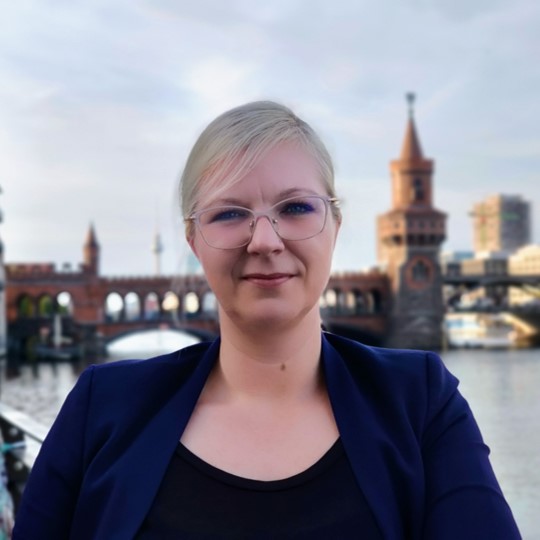
In a recent episode of the “Women Talk Tech” podcast, Erica, CEO and Managing Director of KUNO, joined Sade from Impala Search for an inspiring conversation. Although Erica’s background isn’t in tech, she brings valuable insights into the tech landscape — gained through her experience working with well-known start-ups and technology companies. The discussion is highly personal, offering listeners a glimpse into her professional journey, key lessons learned, and the unique dynamics of the start-up world.

👇Note: The episode is available on Spotify.  

From Hotel Management to the Start-up World

Erica began her career in hotel management — a field that, at first glance, seems far removed from HR and payroll.

“Sometimes the path isn’t straight, but those detours are what make the difference later on.”

Her transition into HR opened new perspectives on people, processes, and organizational structures. Later, she worked at DailyDeal GmbH, Rocket Internet SE, and finleap GmbH, gaining valuable insights into how fast-paced tech start-ups operate and make decisions.

The Dynamics of Tech Start-ups

In the conversation, Erica reflects on typical dynamics within start-ups and tech-driven environments — fast decision-making, experimentation, and the courage to try new things.

“The most important thing I learned there was not to be biased against something new. Just try — even if it’s not perfect.”

This mindset continues to shape her leadership style today — not as a tech founder, but as an HR and payroll expert with deep insights into the tech ecosystem.

From the Tech World to KUNO

The company KUNO was originally founded by Katharina Jung. During a later restructuring, Erica’s role as Managing Director evolved — unexpectedly, but with a clear focus: to preserve KUNO, further develop it, and maintain the quality of services that clients valued so highly.

“Many things I learned in the tech world, I consciously applied at KUNO — like acting fast, building structures pragmatically, and always staying open to new approaches.”

The team played a central role in this transition. The strong foundation the employees had built was worth protecting and evolving. Taking over leadership was an unplanned step — one that ultimately shaped Erica’s own entrepreneurial path and revealed new strengths. Her journey demonstrates how experiences from different stages can connect meaningfully — and how sometimes unexpected turns can lead to new directions.

Women in Leadership

Another core part of the conversation focuses on women in leadership roles. Erica reflects on how the mindset has shifted:

“The confidence of women has changed — thankfully. Today, many believe in themselves more, support one another, and that makes a real difference.”

Mutual support, open exchange, and an inclusive attitude toward different career paths are key elements of her leadership philosophy.

Networks & Shared Learning

Networks such as Tomorrow belongs to you, founded by Vessela Krissel, are key spaces for connection, inspiration, and empowerment.

“Communities like Tomorrow Belongs to Her create bonds that go far beyond professional exchange. They give strength, inspiration, and courage.”

Hearing from others — whether their experiences are positive, challenging, or entirely different — can offer new perspectives and valuable impulses for one’s own path.

At KUNO, we regularly support events and communities that create impact — especially those empowering women, shaping the HR world, or addressing social topics that reflect our values.

Personal Reflections & Learnings

In the podcast, Erica also shares personal stories — including how her family life and work life influence one another. A guiding principle for her has always been courage to try something new, even when uncertainty is present.

“What’s the worst thing that can happen to me?”

That mindset encourages her to take chances, reflect, and grow through experience. One of her favorite quotes captures this outlook perfectly:

“Experience is what you get when you didn’t get what you wanted.”

It’s a philosophy that defines her journey — staying open to new paths, embracing change, and viewing mistakes not as failures, but as valuable lessons.

Why This Episode Is Worth Listening To

For founders, leaders, and HR professionals in start-ups, scale-ups, and SMEs, this conversation offers practical and personal inspiration: career change, leadership without a traditional tech background, the value of networks, and the courage to follow an unplanned path.

Did you find this article interesting?
Feel free to share it with others!

Discover More

Calculating vacation entitlement: Key rules and practical examples
HR & People
Payroll

Calculating vacation entitlement: Key rules and practical examples

Mandy Stegemann
Director Payroll Services
Published on
7.17.2026
X Mins Read

Vacation entitlement when regular working days change 

More and more employees change their working patterns during the course of the year. 

Typical examples include: 

  • moving from full-time to part-time work, or vice versa  
  • reducing the work week from five to four days  
  • increasing from three to five working days  
  • returning from parental leave  

In these situations, vacation entitlement should not simply be recalculated for the entire year. Instead, the entitlement should be assessed separately for each period. 

The purpose of this proportional approach is to ensure that employees are neither disadvantaged nor unfairly advantaged simply because the number of their regular working days changes during the year. Vacation entitlement should always reflect the employee's actual working pattern during each period. 

Example 

An employee works five days per week from January through June and four days per week from July through December. Employees working a five-day week receive 30 vacation days per year. 

In this case, a proportional calculation is appropriate: 

  • January to June: six months based on a five-day work week  
  • July to December: six months based on a four-day work week  

Vacation entitlement is calculated separately for each period using the applicable work schedule. 

These changes should always be documented carefully. It is equally important that HR, payroll, and managers all work from the same data to avoid inconsistencies between employment contracts, HR systems, payroll records, and vacation balances.

Why offsites are more than just a team event – and why shared time at work is often underestimated
KUNO Insights
News & Events

Why offsites are more than just a team event – and why shared time at work is often underestimated

Erica Ancobia
CEO & Managing Director
Published on
7.17.2026
X Mins Read

Offsites do not solve problems – but they can strengthen teams

Of course, a team event does not replace good leadership, healthy processes, or a functioning company culture.

Offsites do not solve structural conflicts, nor do they automatically turn every team into a “perfect match.”

Still, they can create something that often gets lost in everyday work: closeness. Not in a private sense, but in a human one.

Especially in work environments that are increasingly digital, fast-paced, and heavily scheduled, shared time outside of daily operations has become both important and valuable for many teams.

Not as artificial teambuilding or because everyone suddenly needs to become best friends. But because collaboration often works better when people do not only encounter each other between meetings, tickets, and deadlines.

Sometimes, that alone can already be enough to noticeably strengthen a team in the long term.


📌 Looking for inspiration fot your next team event? Contact us directly or book an appointment

📌 Follow KUNO on LinkedIn

📌 Sign up for our newsletters to not miss any further helpful tips

Co-sourcing in HR & payroll teams: when capacity is temporarily missing but quality must remain consistent
HR & People
KUNO Insights
Payroll

Co-sourcing in HR & payroll teams: when capacity is temporarily missing but quality must remain consistent

Erica Ancobia
CEO & Managing Director
Published on
7.17.2026
X Mins Read

Why co-sourcing matters for HR & payroll teams

For many HR teams, the main question is no longer whether external support is possible – but how to integrate it without creating loss of control or process disruption.

A team-based Co-Sourcing model provides:

  • operational stability during staffing gaps
  • retention of internal ownership and decision-making
  • protection against single-person dependency
  • predictable cost structures
  • flexible but structured operational support

Regardless of market conditions, qualified HR professionals remain key business-critical roles. Temporary reinforcement is therefore not a trend, but an established strategic approach to maintaining stability during transition periods without prematurely changing long-term structures.

LEARN MORE ABOUT KUNOKUNO