

BLOG

Workation: Working abroad – what companies and employees need to know
Do not underestimate data protection
Data protection and information security are also critical.
Employees working from a café, hotel, or coworking space face different risks than they would in a home office.
Companies should therefore establish clear requirements, such as:
- using a VPN,
- using encrypted devices,
- avoiding unsecured public Wi-Fi networks,
- using privacy screens when handling confidential data, and
- storing work devices securely.
This is particularly important for companies that handle sensitive employee, customer, or financial data.


Calculating vacation entitlement: Key rules and practical examples

Vacation entitlement when regular working days change
More and more employees change their working patterns during the course of the year.
Typical examples include:
- moving from full-time to part-time work, or vice versa
- reducing the work week from five to four days
- increasing from three to five working days
- returning from parental leave
In these situations, vacation entitlement should not simply be recalculated for the entire year. Instead, the entitlement should be assessed separately for each period.
The purpose of this proportional approach is to ensure that employees are neither disadvantaged nor unfairly advantaged simply because the number of their regular working days changes during the year. Vacation entitlement should always reflect the employee's actual working pattern during each period.
Example
An employee works five days per week from January through June and four days per week from July through December. Employees working a five-day week receive 30 vacation days per year.
In this case, a proportional calculation is appropriate:
- January to June: six months based on a five-day work week
- July to December: six months based on a four-day work week
Vacation entitlement is calculated separately for each period using the applicable work schedule.
These changes should always be documented carefully. It is equally important that HR, payroll, and managers all work from the same data to avoid inconsistencies between employment contracts, HR systems, payroll records, and vacation balances.
.png)
Why offsites are more than just a team event – and why shared time at work is often underestimated
Offsites do not solve problems – but they can strengthen teams
Of course, a team event does not replace good leadership, healthy processes, or a functioning company culture.
Offsites do not solve structural conflicts, nor do they automatically turn every team into a “perfect match.”
Still, they can create something that often gets lost in everyday work: closeness. Not in a private sense, but in a human one.
Especially in work environments that are increasingly digital, fast-paced, and heavily scheduled, shared time outside of daily operations has become both important and valuable for many teams.
Not as artificial teambuilding or because everyone suddenly needs to become best friends. But because collaboration often works better when people do not only encounter each other between meetings, tickets, and deadlines.
Sometimes, that alone can already be enough to noticeably strengthen a team in the long term.
📌 Looking for inspiration fot your next team event? Contact us directly or book an appointment
📌 Sign up for our newsletters to not miss any further helpful tips

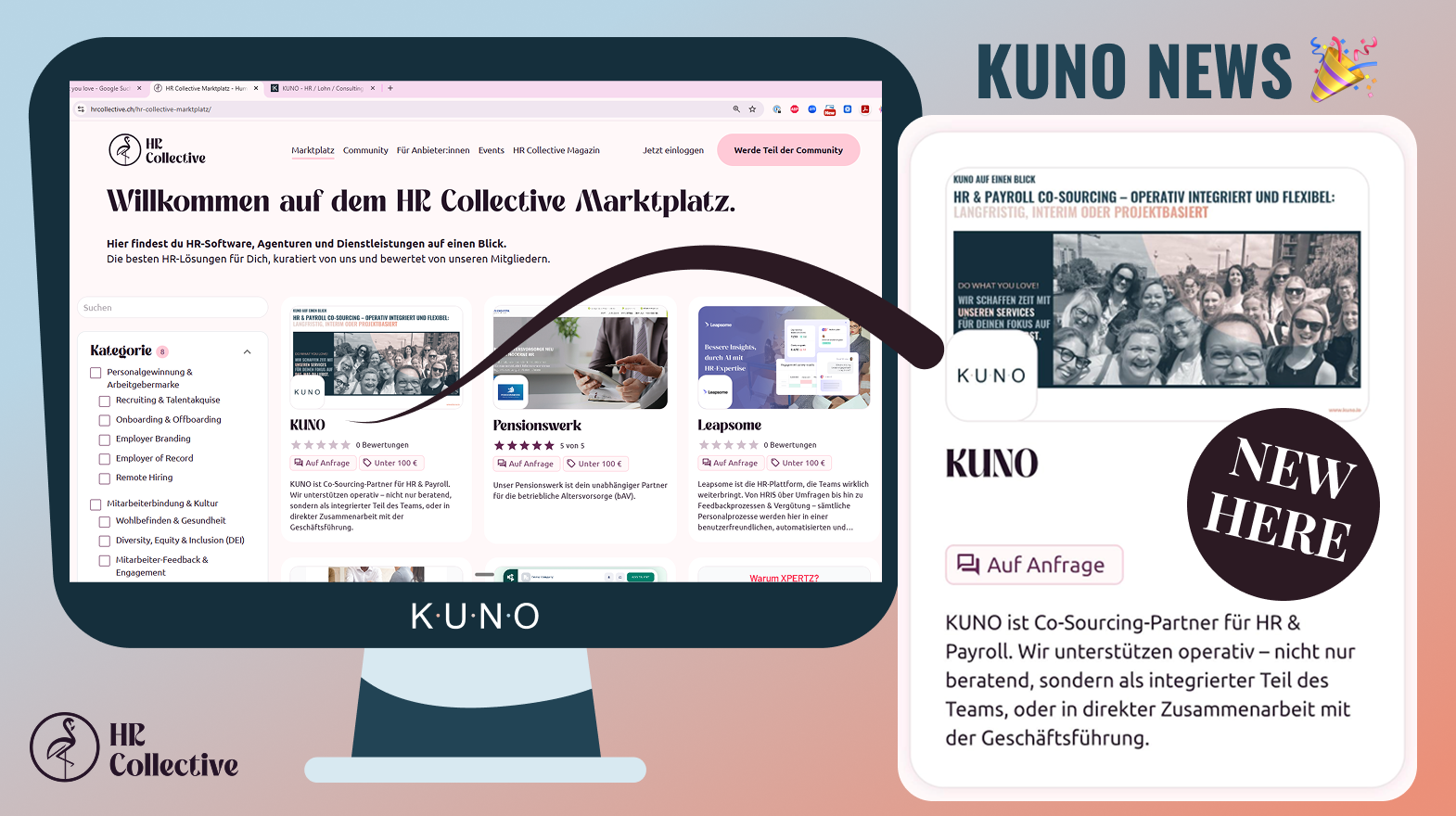
Co-sourcing in HR & payroll teams: when capacity is temporarily missing but quality must remain consistent
Why co-sourcing matters for HR & payroll teams
For many HR teams, the main question is no longer whether external support is possible – but how to integrate it without creating loss of control or process disruption.
A team-based Co-Sourcing model provides:
- operational stability during staffing gaps
- retention of internal ownership and decision-making
- protection against single-person dependency
- predictable cost structures
- flexible but structured operational support
Regardless of market conditions, qualified HR professionals remain key business-critical roles. Temporary reinforcement is therefore not a trend, but an established strategic approach to maintaining stability during transition periods without prematurely changing long-term structures.
Workation: Working abroad – what companies and employees need to know
Do not underestimate data protection
Data protection and information security are also critical.
Employees working from a café, hotel, or coworking space face different risks than they would in a home office.
Companies should therefore establish clear requirements, such as:
- using a VPN,
- using encrypted devices,
- avoiding unsecured public Wi-Fi networks,
- using privacy screens when handling confidential data, and
- storing work devices securely.
This is particularly important for companies that handle sensitive employee, customer, or financial data.
HR Compliance in Organizations: Typical Risks and Practical Solutions

Documenting Processes – With Support From AI
Another practical lever for reducing compliance risks is improving process documentation.
Many HR workflows function very well in everyday operations but have never been formally documented. Only when external audits occur or new team members need to be onboarded does it become clear how much knowledge exists only implicitly within the team.
AI tools can be helpful in structuring these processes and creating initial documentation. For example, they can support HR teams by helping to:
- translate existing workflows into clear process steps
- draft initial Standard Operating Procedures
- make workflows and responsibilities visible
- structure documentation drafts
It is essential that no personal or sensitive data is entered into such tools and that data protection requirements are always followed.
The key point is that processes do not need to be perfectly documented in order to be useful. Even an initial structured description can create transparency and significantly reduce the risk that knowledge exists only in the minds of individual employees.
.png)
Error culture as a competitive advantage – why the way companies handle mistakes determines success
Innovation requires tolerance for mistakes
Companies expect initiative, speed, and innovation from their teams. At the same time, they often implicitly expect perfection.
That combination rarely works. When employees feel they are not allowed to make mistakes, they become more cautious. Decisions are delayed, risks are avoided, and ideas are held back. This affects not only product development, but every area of a business.
A healthy error culture creates the framework necessary to try new approaches. It allows teams to make decisions, evaluate experiences, and improve processes iteratively.
This does not mean ignoring risks. It means managing them consciously and learning from deviations instead of hiding them.
The Perfect Termination Doesn’t Exist – But a Professional Termination Process Does

Follow-Up: The Often Overlooked Phase
Many organizations focus primarily on the termination meeting itself.
However, the actual impact often occurs afterward.
For the Employee
Follow-up steps may include:
- clarifying remaining vacation and potential garden leave
- preparing employment certificates and documentation
- organizing handovers and returning company equipment
Offering the opportunity for an additional conversation can also help address open questions.
For the Team
A termination always affects the wider team.
Colleagues may ask questions such as:
- What happened?
- What will happen next?
- Who will take over responsibilities?
Providing a short and clear explanation can reduce uncertainty and strengthen trust in leadership and HR.
For HR and Leadership
After a termination, it can be helpful to reflect internally:
- Did we respond early enough?
- Were expectations communicated clearly?
- Did our processes work effectively?
These reflections can help improve how similar situations are handled in the future.

Occupational Pension Schemes – Legal Requirement, Benefit, and Process Challenge
Today: Digital Occupational Pension Platforms
Today, specialized partners offer occupational pension schemes as integrated services, for example Insurancy.
These providers combine:
- digital consultation
- transparent comparison models
- employee communication tools
- administration platforms
- support for onboarding and offboarding
- payroll integrations
This means HR teams no longer need to coordinate every contract change individually.
For HR teams and employees, this creates several practical advantages:
Reduced HR workload
Communication, advice, and contract management are handled in a structured way through a platform.
Transparency for employees
Digital dashboards provide clear insight into contributions and future projections.
Standardized processes
Fewer individual special solutions and more systematic structures.
Compliance security
Documentation and employer contributions are recorded correctly.
Scalability
Particularly important for growing organizations.
Despite these advantages, one important point remains: responsibility for occupational pensions ultimately remains with the employer.
Even when using a platform:
- the employer remains the contractual partner
- correct payroll implementation remains an internal responsibility or lies with the payroll provider
- liability issues cannot be fully outsourced
This is why clear internal responsibilities and close collaboration between HR, finance, and payroll remain essential.
%20(787%20x%20524%20px)%20(5).png)
Benefits are not a fruit basket – why standard solutions no longer work
How companies can find the right approach
The biggest challenge is not choosing a specific benefit. It is understanding what is actually needed.
Successful companies take a step back. They look beyond what is offered and focus on how their workforce actually lives and works.
Which life stages are represented? Which challenges appear repeatedly? Which benefits are used – and which are not?
Only then does a meaningful setup emerge.
It is also important not to view benefits in isolation. Topics such as tax treatment, system integration, and communication are just as important as the benefit itself.
This is often where support becomes relevant – not in choosing a specific benefit, but in evaluating, implementing, and integrating it into existing structures.

Mental health in remote teams: A key factor for stability, performance, and trust
Conclusion and more on LinkedIn
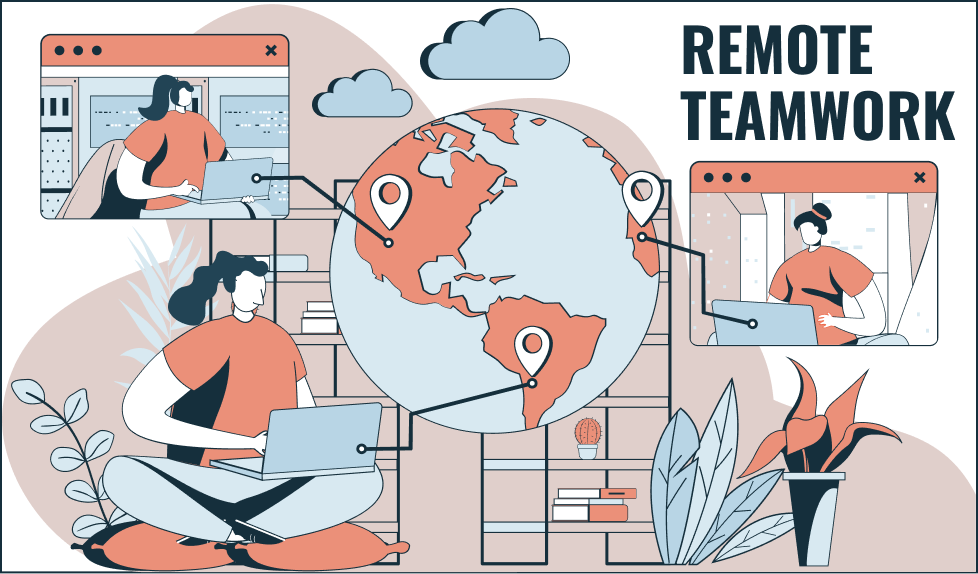
Mental health in remote teams is not an “extra task,” but a central foundation. Those who take it seriously don’t just strengthen their teams – they also enhance the performance and innovative capacity of the entire organization. Tools like nilo make it possible to provide access to mental health support digitally – professionally, confidentially, and flexibly. What truly matters is integration into everyday work: not as an exception, but as a standard.
In our joint LinkedIn series with nilo, we share additional concrete insights beyond the video mentioned above – into our work, our mindset, and our HR structures, including:
- a personal perspective on usage from our colleague Yvonne
- a one-pager on mental health in remote teams
📌 Questions on how to promote mental health in your team? Contact us directly or book an appointment
📌 Sign up for our newsletter to not miss any further helpful tips

FIND OUT MORE ABOUT KUNO
