


HR Compliance in Organizations: Typical Risks and Practical Solutions
Compliance is one of those topics in HR that often only becomes visible when a concrete trigger occurs. As long as processes run smoothly, contracts are in place, and salaries are calculated correctly, everything appears well organized. It is only when an audit is announced, investors request information, or new regulatory requirements must be implemented that the resilience of the underlying structures truly becomes visible.
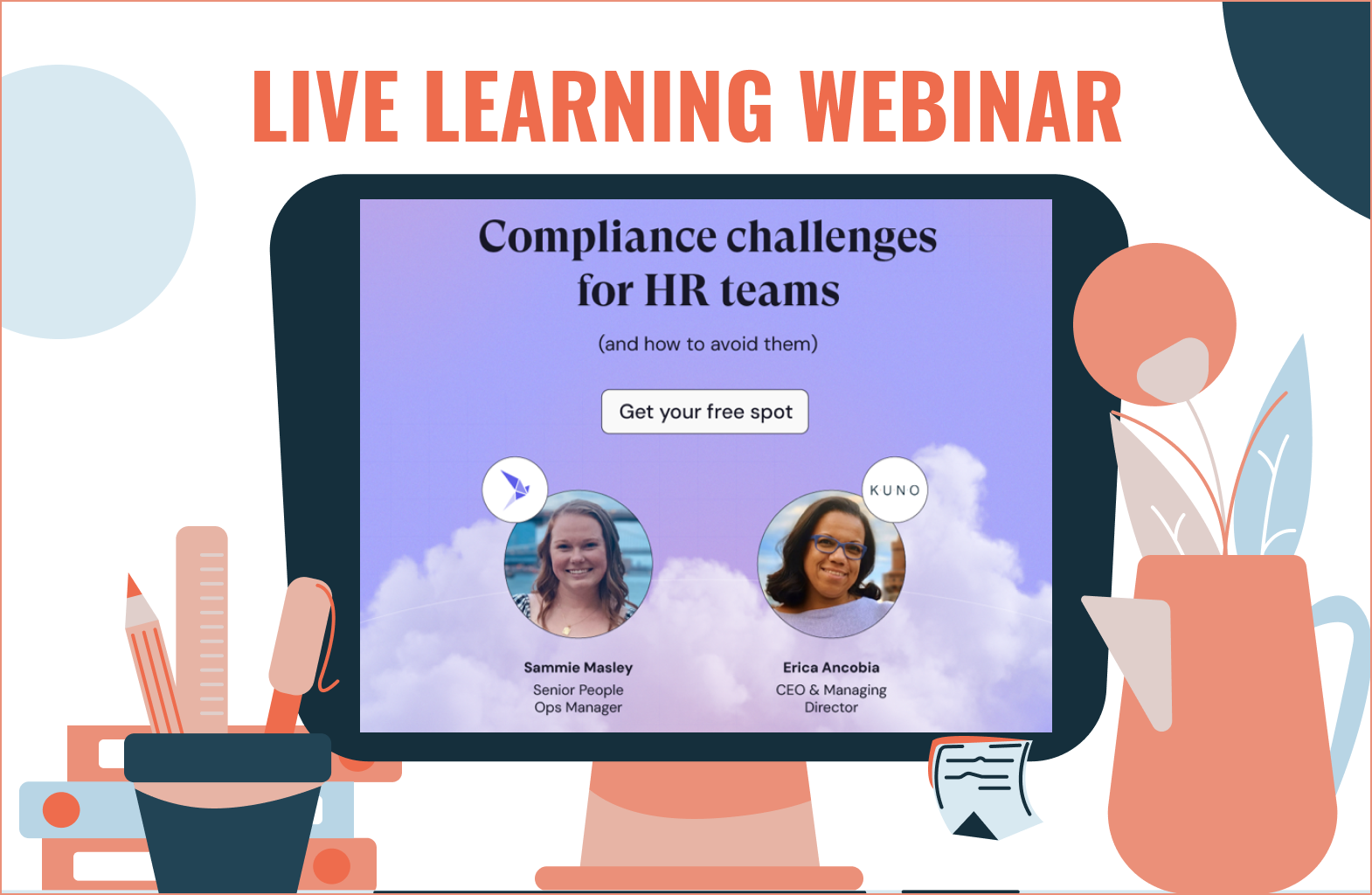
In the webinar “Compliance Challenges for HR Teams,” organized by Leapsome, Erica Ancobia (CEO of KUNO) and Sammie Masley (Sr. People Ops Manager at Leapsome) discussed typical challenges in HR practice in both Germany and the United States. They also explored why compliance gaps often arise not from a lack of diligence, but from fragmented systems, missing documentation, or unclear responsibilities between teams.
Many of the topics discussed in the webinar also appear regularly in the daily work of HR and payroll teams: information is stored in different tools, decisions are insufficiently documented, or processes exist only implicitly. This article picks up key insights from the webinar and expands on them with practical examples from HR operations.
Anyone who would like to watch the conversation between Erica and Sammie in detail can find the full webinar recording here (available in English).
Why Compliance Issues Rarely Appear Overnight
Compliance risks rarely emerge suddenly. In most cases, they develop gradually through everyday operational work.
As organizations grow, new systems, roles, and interfaces between teams are introduced. HR works more closely with Finance, payroll processes become more complex, and new regulatory requirements arise. At the same time, the need for documentation increases – for example through investors, external auditors, or legal obligations.
Many risks arise not because of negligence, but because of structures that have evolved over time. Information is stored across multiple systems, processes are passed on verbally within teams, or responsibilities are not clearly defined.
As long as no one specifically asks for this information, these gaps often remain unnoticed. But when an audit is scheduled, a due diligence process begins, or new leadership requests transparency, these structures suddenly need to be clearly documented.
At that point, it quickly becomes apparent whether HR processes are already audit-ready – or whether information first needs to be collected from multiple sources.
Early Warning Signs of Compliance Risks
A surprisingly reliable indicator of structural compliance risks is stress when answering seemingly simple questions.
If HR teams have to search through multiple systems to provide basic information, this can be an early warning sign. This effect appears more frequently than expected, especially in growing organizations.
Typical examples include questions such as:
- the current headcount by location or department
- an overview of bonus payments for a specific year
- documentation of an onboarding process
- the criteria behind compensation decisions
These questions initially seem trivial. However, if they can only be answered by combining data from different systems, this creates unnecessary operational effort and increases the risk of inconsistencies.
In many cases, this “system hopping” effect indicates that processes and data structures should be consolidated more effectively.
Typical Compliance Challenges in Everyday HR Operations
In practice, similar patterns appear again and again. They usually arise not because of misconduct, but because organizational structures have developed over time.
Fragmented Systems and Data Landscapes
Many organizations work with a wide range of systems for HR, payroll, and finance processes. As companies grow, new tools are often introduced – for example for recruiting, performance management, or benefits administration.
Typical examples include:
- HR systems
- payroll systems
- finance tools
- performance management platforms
- recruiting systems
- benefits platforms
- bonus lists or compensation spreadsheets
- document management systems
The real issue is usually not the tools themselves, but the lack of integration between them.
Especially in areas such as compensation or bonus payments, HR, payroll, and finance must work closely together. When relevant data is stored in separate systems, information often has to be manually consolidated. This not only increases operational workload but also raises the risk of inconsistencies.
Technology can help reduce this fragmentation. Modern HR platforms combine multiple HR processes within one central environment and therefore create a stronger foundation for compliance, transparency, and documentation.
One example is the platform Leapsome, which connects HRIS functionality with performance management, feedback processes, and workflow automation. In compliance-related areas, this kind of structure can help organizations document information consistently and make processes more transparent.
For example, when approval processes for compensation adjustments, feedback cycles, or organizational changes run through clearly defined workflows, a traceable documentation trail is created automatically. At the same time, the manual effort that often arises when data must be collected from multiple tools is significantly reduced.
For HR teams, this not only improves process visibility but also provides a more stable foundation for audits, reporting, and internal coordination with payroll, finance, or legal teams.
Missing Documentation of Decision Rationales
Audits rarely focus solely on numbers. In many cases, auditors want to understand why certain decisions were made.
A common example involves compensation decisions. When bonus payments, individual benefits, or salary adjustments are implemented, auditors typically expect a clear and traceable explanation.
Particularly relevant documentation includes:
- bonus decisions
- individual benefits
- compensation adjustments
- deviations from standard policies
- the reasoning behind salary differences
As long as the responsible individuals are still working in the organization, many of these questions can usually be answered quickly. However, challenges arise when decisions are reviewed years later or when the people involved are no longer with the company.
For this reason, a frequent audit finding is not an incorrect process – but missing context.
Processes Exist – But Only in the Minds of Individuals
Many HR processes appear straightforward in everyday operations. As long as the same individuals handle them regularly, they often run smoothly.
Typical examples include onboarding processes, offboarding procedures, contract extensions, or changes with payroll relevance.
However, when an audit takes place or a new manager asks for a formal process description, it often becomes clear how many stakeholders are actually involved. What seemed like a simple process suddenly includes coordination with IT, finance, payroll, management, and other departments.
In such situations, structured documentation becomes extremely valuable. AI tools can support this process by helping HR teams create initial SOPs (Standard Operating Procedures) or structure existing workflows.
It is important, of course, that no personal data is entered into such tools and that data protection requirements are always respected.
Unclear Responsibilities Between Departments
Many compliance risks arise not within a single team, but at the interfaces between departments.
HR works closely with payroll, finance, and sometimes legal. When responsibilities are not clearly defined, communication gaps can quickly appear.
Typical situations include:
- bonus decisions prepared by HR but not aligned early enough with finance for budget validation
- contract changes documented but not communicated to payroll in time
- variable compensation approved without finance evaluating its budget impact
- freelancers working operationally like employees without proper legal classification
These situations rarely occur because of intentional mistakes. Instead, they usually result from missing coordination structures between teams.
Compliance Risks Often Emerge Through Predictable Events
Interestingly, many compliance gaps only become visible when a specific event occurs.
Typical triggers include:
- leadership changes
- funding rounds
- due diligence processes
- internal or external audits
- regulatory changes
One current example is the EU Pay Transparency Directive, which will increasingly require organizations to document salary differences transparently (see also our blog article “Preparing for Pay Transparency: Why Pay Transparency Will Become a Strategic HR Topic by 2026”).
These developments often force organizations to provide information that was previously never systematically recorded.
Germany-Specific Compliance Topics
Organizations employing people in Germany often face additional regulatory requirements.
Beyond legal obligations, companies must also prepare for various types of audits and regulatory reviews.
Examples include:
- social security audits by the German Pension Insurance authority
- payroll tax audits by the tax authorities
- data protection audits
- occupational safety inspections
- audits related to ISO certifications
- financial audits by external auditors
- audits during M&A processes
- due diligence reviews during investments
- HR and payroll reviews during funding rounds
International companies in particular often underestimate the complexity of German HR and payroll regulations. Structured documentation and clearly defined processes significantly simplify preparation for such reviews.
Documenting Processes – With Support From AI
Another practical lever for reducing compliance risks is improving process documentation.
Many HR workflows function very well in everyday operations but have never been formally documented. Only when external audits occur or new team members need to be onboarded does it become clear how much knowledge exists only implicitly within the team.
AI tools can be helpful in structuring these processes and creating initial documentation. For example, they can support HR teams by helping to:
- translate existing workflows into clear process steps
- draft initial Standard Operating Procedures
- make workflows and responsibilities visible
- structure documentation drafts
It is essential that no personal or sensitive data is entered into such tools and that data protection requirements are always followed.
The key point is that processes do not need to be perfectly documented in order to be useful. Even an initial structured description can create transparency and significantly reduce the risk that knowledge exists only in the minds of individual employees.
What HR Teams Should Focus on in the Next Three to Six Months
A final question discussed in the webinar was: If HR teams could prioritize one action over the next three to six months to reduce compliance risks, what should it be?
The recommendation was simple: prepare through awareness.
Many compliance challenges do not appear unexpectedly. Certain audits, regulatory requirements, or investor questions are foreseeable in many organizations. It therefore makes sense to proactively consider which issues could realistically arise.
HR teams can ask themselves questions such as:
- Which audits are common in our industry or country?
- What data or documentation is typically reviewed?
- Where is this information currently stored within the organization?
- Could we provide this data in a structured way within a few days if required?
Even this kind of analysis can reveal potential weaknesses. Organizations that anticipate possible audits and regulatory requirements can prepare processes and documentation proactively – rather than reacting under time pressure.
Conclusion
HR compliance is not a one-time project but an ongoing process. Many risks arise not from a lack of diligence, but from fragmented systems, missing documentation, or unclear responsibilities between teams.
Organizations that establish clear processes early, consolidate their data structures, and define responsibilities transparently not only reduce compliance risks – they also create a stable foundation for the further development of their HR functions.
Technology can support this by structuring processes and simplifying documentation. At the same time, strong collaboration between HR, payroll, finance, and where necessary legal teams remains essential.
Organizations that address compliance proactively not only reduce risks but also create more space for strategic HR work.

📌 Questions about HR compliance? Contact us directly or book a meeting
📌 Subscribe to our newsletter so you don’t miss future insights


.png)